- Sep 20
- Par Pecron LLC

The short answer: a portable power station is usually the better fit for quiet, low-maintenance backup of essential devices, while a gas generator has an advantage during long outages when you need sustained output and can keep fuel available. Neither option is best in every situation.
The right choice depends on what you need to power, how long the outage may last, whether you can recharge or refuel, and where the equipment can be operated safely. This guide compares the two systems by runtime, output, noise, safety, maintenance, and day-to-day convenience.
Portable Power Station vs Gas Generator Quick Comparison
|
Factor |
Portable Power Station |
Gas Generator |
|
Energy source |
Electricity stored in a battery |
Fuel burned in an engine |
|
Runtime |
Limited by stored energy and recharging |
Can continue while fuel is available |
|
Noise |
No combustion engine; cooling fans may run |
Engine noise, even on inverter models |
|
Exhaust |
No combustion exhaust while supplying power |
Produces carbon monoxide and other exhaust |
|
Where it can operate |
Often used indoors when the product instructions allow it |
Outdoors only and away from buildings |
|
Maintenance |
Battery care, charging, storage, and inspection |
Oil, filters, spark plug, fuel system, and testing vary by model |
|
Energy replenishment |
AC, solar, vehicle, or other supported input |
Refueling with the approved fuel |
|
Best fit |
Essential loads, overnight backup, RVs, camping |
Long outages and sustained high loads |

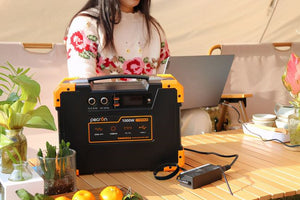
Portable Power for Essential Household Loads
How Each Backup Power System Works
A portable power station stores electricity in a rechargeable battery and sends that energy through an inverter to its AC outlets. It may also provide regulated DC and USB outputs. The battery capacity is measured in watt-hours, while the maximum output is measured in watts.
A gas generator produces electricity while its engine is running. Its output is also measured in watts, but its runtime depends on tank size, fuel consumption, load, and operating conditions. It can be refueled after the engine is shut down and allowed to cool according to the manufacturer’s instructions.
This difference explains most of the tradeoffs. A battery system is quiet and simple to start, but it contains a fixed amount of energy. A generator can keep making electricity as long as fuel remains available, but it brings engine noise, exhaust, fuel handling, and maintenance.
Watts and Watt Hours Explained
Watts and watt-hours answer different questions. Watts show whether the system can operate an appliance at a given moment. Watt-hours show how much energy the battery stores and help estimate how long it can run that appliance.
A 100W device running for eight hours would theoretically use 800Wh:
100W × 8 hours = 800Wh
Real battery runtime is lower than this theoretical result because the inverter, internal electronics, temperature, battery condition, and changing loads all affect usable energy. A larger output rating does not automatically mean longer runtime.
Before buying a power station, confirm both the continuous and surge output required by your appliances, then calculate the battery capacity needed for the target runtime. For a fuel generator, also compare rated running watts, starting watts, and fuel consumption at the expected load.
Seven Differences That Matter During an Outage
Runtime and energy supply
A battery power station stops supplying power when its usable stored energy is depleted. Runtime can be extended by adding compatible expansion batteries or recharging from AC, a vehicle, or solar panels, but the available input and charging conditions set the limit.
A gas generator can support a longer outage when fuel is available. This advantage becomes important during several days of poor weather, especially when solar production is limited and the household needs sustained power.
Output and appliance startup
Both systems must handle the running power and the brief startup surge of connected appliances. Refrigerators, pumps, air conditioners, and power tools can draw much more power when their motors start. Check the appliance label or measure the load, then compare it with the system’s continuous and surge ratings.
High output alone does not guarantee enough runtime. A 4,000W inverter can operate demanding equipment, but battery capacity still determines how long those loads can remain on.
Noise level
Inverter generators are usually quieter than conventional open-frame models, but they still use an engine. As one current example, Honda lists the EU2200i at 48 to 57 dBA, with the exact noise level varying by operating condition and load.
A portable power station has no combustion engine. Its cooling fans may become audible under heavier loads or during fast charging, but it does not need an engine running outside through the night. That difference matters when the backup is used near bedrooms, neighbors, a campsite, or an RV.
Indoor use and carbon monoxide safety
Never run a portable gas generator in a home, garage, basement, shed, crawlspace, porch, carport, or any other enclosed or partially enclosed space. Opening doors and windows does not make indoor operation safe.
The U.S. Consumer Product Safety Commission says portable generators should be used outdoors only, at least 20 feet from the home, with the exhaust directed away from the building. Homes using a generator should also have working carbon monoxide alarms.
A battery power station does not burn fuel while supplying power, so it does not produce combustion exhaust during normal operation. It must still be used within the product’s limits for temperature, moisture, ventilation, charging, cable loading, and storage.

Unsafe Generator Placement Example
Maintenance and storage
A gasoline generator needs more mechanical care. Depending on the model, the schedule may include engine-oil changes, air-filter checks, spark-plug service, fuel-system maintenance, and regular test runs. Old fuel and long periods without testing can leave an emergency generator difficult to start when it is finally needed.
A power station has no engine oil, spark plug, or fuel tank. Its main care requirements are keeping the battery within the recommended charge range, storing it within the specified temperature range, checking it periodically, and protecting it from moisture and physical damage.
|
Maintenance Item |
Portable Power Station |
Gas Generator |
|
Engine oil |
Not applicable |
Required on many models |
|
Spark plug |
Not applicable |
Required on many models |
|
Fuel storage |
Not required |
Required for gasoline operation |
|
Battery care |
Yes |
May include a starter battery |
|
Periodic testing |
Recommended |
Recommended |
|
Mechanical service |
Minimal |
Varies by engine and model |

Gas Generator and Portable Power Station Maintenance Comparison
Fuel handling and recharging
Generator owners need an approved fuel container, a safe storage plan, and enough fuel for the expected outage. Gasoline should be stored and handled according to local rules, fire-safety guidance, and the equipment manufacturer’s instructions. The generator must be shut down and allowed to cool before refueling.
A battery system can recharge from the grid before an outage and from supported inputs afterward. Adding compatible panels creates a solar generator, but solar is not unlimited power. Daily energy production changes with weather, daylight, shading, panel angle, and the station’s input limit.
Purchase price and total ownership cost
Gas generators often provide more continuous power for a lower initial price, especially at higher output levels. Their long-term cost also includes fuel, oil, replacement parts, and mechanical service. Fuel availability and price can become unpredictable during a widespread emergency.
Portable power stations often cost more upfront for the same headline output, but they do not require gasoline or routine engine service. Solar panels and expansion batteries add to the initial investment. Compare the complete system you actually need rather than only the base-unit price.
There is no universal cost winner. A generator used for a rare, long outage has a different cost profile from a battery system used every week for camping, RV travel, time-of-use shifting, or mobile work.
Which Is Better for Short and Long Power Outages
Short outages and overnight backup
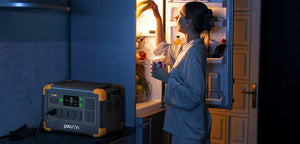
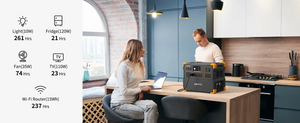
For a short outage, many homes only need a refrigerator, Wi-Fi router, a few lights, phones, and laptops. A portable power station is convenient here because it starts immediately, can sit near the devices when the instructions allow indoor use, and does not require fuel handling or an engine outside.
Multi day outages
For an outage lasting several days, energy replenishment becomes the deciding factor. A generator may be more practical when you can store or obtain fuel safely and must support higher loads for long periods. A battery system can also work when it has enough expansion capacity and dependable charging, but poor solar conditions or limited grid access can reduce that advantage.
A hybrid approach
Some households use both. The generator can run heavier daytime loads and charge compatible battery equipment, while the power station handles quiet overnight loads. This reduces engine runtime and preserves battery energy for the hours when noise and fuel use matter most.
Never connect a generator or power station to household wiring with an improvised cable. Backfeeding can electrocute utility workers and create a fire risk. Use listed transfer equipment when required, follow the equipment instructions, and have household connections installed or reviewed by a qualified electrician.
How to Estimate Portable Power Station Runtime
For a steady AC load, a practical planning formula is:
Estimated runtime = Battery capacity in Wh × 0.85 ÷ Average load in W
The 0.85 factor is a planning allowance for inverter and system losses, not a guaranteed efficiency rating for every product or load.
For example, a 1,024Wh power station running a steady 120W load gives this estimate:
1,024Wh × 0.85 ÷ 120W = 7.25 hours
Cycling appliances such as refrigerators need a different approach because the compressor turns on and off. Measure average consumption over time when possible. See our full guide on how long a portable power station will run for runtime charts and additional examples.
Generator runtime should be estimated from the manufacturer’s fuel-consumption data at a stated load. Honda, for example, lists the EU2200i at 3.2 to 8.1 hours on one tank depending on load. Do not compare a generator’s quarter-load runtime with another model’s full-load figure as though the test conditions were equal.
What Can a Portable Power Station Run
Start with essential loads instead of trying to power the entire home. A typical outage plan may include the following:
· Refrigerator or freezer
· Wi-Fi router and modem
· LED lights
· Phones and laptops
· CPAP or other approved medical equipment
· Television and small electronics
· Selected kitchen appliances used one at a time
Central air conditioning, electric resistance heat, water heaters, ovens, well pumps, and other large loads can require much more power. Confirm voltage, continuous watts, startup surge, and connection requirements before assuming a portable system can operate them.
For refrigerators, use average energy consumption and compressor startup requirements rather than the maximum label wattage alone. Our guide to choosing a portable power station for a refrigerator explains the sizing process in more detail.

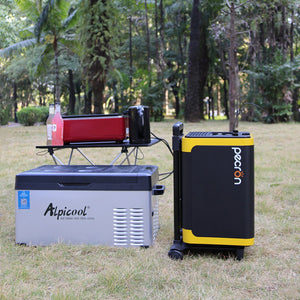
Portable Power for a Refrigerator and Essential Devices
When a Gas Generator Makes More Sense
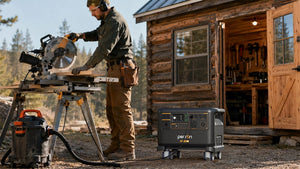
A gas generator is often the more practical choice when the outage may last for days, fuel is available, and the load is too large or continuous for the planned battery capacity. It can also suit remote work sites where heavy tools must run for long shifts and engine noise is less restrictive.
Choose this route only when you have a safe outdoor operating location, a fuel-storage plan, working carbon monoxide alarms, proper extension cords or transfer equipment, and time for routine maintenance. The generator’s ability to keep running does not reduce the need for safe placement and electrical setup.
When a Portable Power Station Makes More Sense
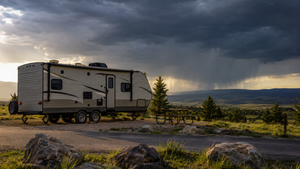
A portable power station is a strong fit when you need quiet backup for essential devices, want to avoid gasoline storage, or expect to use the system for RV travel, camping, outdoor events, and mobile work as well as emergencies.
It is especially convenient for nighttime loads such as a refrigerator, router, lights, phone chargers, and a laptop. The system can be charged in advance, stored according to the manual, and turned on without starting an engine. Compatible solar input can extend operation when sunlight and panel capacity are sufficient.
PECRON E3800LFP for Battery Based Home Backup
For users comparing higher-capacity battery systems, the PECRON E3800LFP combines 3,840Wh of storage with 4,200W of 120V AC output. According to the current U.S. product specifications, it supports up to 3,000W of solar input and can expand to 26,880Wh with six compatible EP3800-48V batteries.
|
E3800LFP Specification |
Current U.S. Product Specification |
|
Battery capacity |
3,840Wh |
|
AC output |
4,200W at 120V for one unit |
|
Battery chemistry |
LiFePO4 |
|
Cycle life |
3,500+ cycles to 80%+ capacity |
|
Maximum solar input |
3,000W through two supported XT60 inputs |
|
Expansion capacity |
Up to 26,880Wh with six EP3800-48V batteries |
|
Additional functions |
UPS support, Bluetooth, app control, 12V and USB outputs |
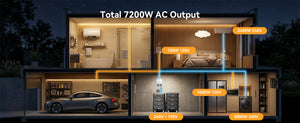
Those specifications make it suitable for larger essential-load plans, RV use, and expandable home backup. It does not make every gas generator unnecessary. The decision still depends on load, runtime, charging access, and whether the required appliances need 120V or 240V power.
If the goal is a broader battery and solar setup, compare the required daily energy with the available charging window before choosing a home backup power configuration.

PECRON E3800LFP with Portable Solar Panels
How to Choose the Right Backup Power in 2026
Use your actual load plan rather than the largest number on the product page. List the appliances that must remain on, record their running and startup watts, estimate the hours of use, and decide how energy will be replenished during the outage.
|
Your Priority |
Better Starting Point |
|
Quiet overnight backup |
Portable power station |
|
No gasoline storage |
Portable power station |
|
Indoor use near essential devices |
Portable power station, within product instructions |
|
Solar recharging |
Portable power station or solar generator kit |
|
Multi-day outage with reliable fuel |
Gas generator |
|
Sustained high-power loads |
Gas generator or a properly sized large battery system |
|
Lowest engine maintenance |
Portable power station |
|
Quiet nights plus long-duration generation |
Hybrid battery and generator strategy |
For most short outages and essential household loads, a portable power station is the simpler option. For extended outages with continuous high demand, a gas generator is often easier to keep running. A hybrid system offers the most flexibility when the budget, space, and safety plan support both.
Frequently Asked Questions
Is a portable power station better than a gas generator?
It is better for quiet, low-maintenance backup when the load fits the inverter and battery capacity. A gas generator is usually better for prolonged high-demand use when fuel is available and the unit can be operated safely outdoors.
Can a gas generator be used indoors?
No. Never use a portable gas generator inside a home, garage, basement, shed, crawlspace, porch, or carport, even with doors and windows open. CPSC guidance says to operate it outdoors at least 20 feet from the home with the exhaust directed away.
How long will a portable power station run a refrigerator?
Runtime depends on the refrigerator’s average energy use, compressor cycling, startup surge, battery capacity, inverter losses, temperature, and any other connected loads. Measure consumption over 24 hours when possible instead of assuming the refrigerator draws its rated maximum continuously.
Are inverter generators quiet?
They can be quieter than open-frame generators, especially at lighter loads, but they still produce engine noise. Published noise figures should be compared only when the manufacturer states the load and measurement conditions.
Can solar panels keep a portable power station running indefinitely?
Only when usable solar production consistently matches or exceeds total energy consumption. Clouds, seasonal daylight, shading, panel orientation, temperature, and the power station’s charging limit can prevent that balance.
Can a portable power station and generator be used together?
Yes, if each device supports the intended connection and all manufacturer instructions are followed. A generator can handle heavier daytime loads or recharge compatible equipment, while the battery system supplies quieter overnight power. Never improvise a connection to household wiring.
Can the PECRON E3800LFP replace a gas generator?
It can replace a generator for many essential-load plans when 4,200W of AC output and the selected battery capacity meet the appliances and runtime requirement. A fuel generator can still be more practical when an outage lasts for days and dependable recharging is unavailable.