- Jul 31
- Par Pecron LLC

An RV trip can move from clear skies to a serious weather problem in a matter of hours. Thunderstorms, flash floods, wildfire smoke, extreme temperatures, tropical storms, and power outages all require different decisions—and an RV is not a substitute for a sturdy storm shelter.
The safest plan starts before departure: monitor the full route, identify shelter and exit options, carry a practical emergency kit, and keep enough stored energy for communication, lighting, refrigeration, and necessary medical devices. This guide explains how to build that plan without turning your RV into an overloaded supply closet.
|
Quick answer: When severe weather threatens, act early. Follow local alerts and evacuation orders, move away from flood-prone ground, and use a sturdy building or designated shelter for tornadoes and destructive winds. Backup power can keep essential devices available, but it does not make an unsafe campsite safe. |
Before Your RV Trip: Check More Than the Destination Forecast
A destination forecast only tells part of the story. Conditions can change sharply along a route that crosses mountains, deserts, coastal areas, or open plains. Check the forecast for travel days and overnight stops, then review alerts again before pulling out.
Before leaving, confirm the following:
· The severe-weather outlook for your route, destination, and return trip
· The campground’s storm shelter, evacuation route, and after-hours contact
· Whether the campsite sits near a dry wash, creek, low crossing, steep slope, or unstable trees
· Two ways to receive warnings, such as phone alerts plus a battery-powered or hand-crank weather radio
· Offline maps, emergency contacts, fuel level, and a fallback destination
For boondocking, build in more margin. Cell coverage may be unreliable, roads may become impassable, and help may take longer to arrive. Download maps before leaving coverage and avoid arriving with nearly empty water, fuel, or battery reserves.
When Severe Weather Approaches: Decide Early

The hardest decisions become easier when they are made before roads, visibility, or wind conditions deteriorate. If authorities issue an evacuation order, leave promptly and follow the designated route. Do not stay simply because the RV is already set up.
1. Check the exact warning, expected timing, and affected area.
2. Choose shelter or evacuation based on the hazard—not convenience.
3. Retract awnings, bring in furniture, secure loose gear, and close windows and roof vents.
4. Charge phones, radios, lights, battery packs, and backup power equipment while shore power is available.
5. Tell everyone where to meet, which route to use, and who is responsible for pets, documents, and medications.
Use the Right Safety Action for the Hazard
Tornadoes and destructive winds
Do not use an RV as a tornado or high-wind shelter. Move to a designated storm shelter or nearby sturdy building before the storm arrives. Stay away from windows and follow local emergency instructions. High-profile RVs are also vulnerable to crosswinds, so avoid driving when official warnings or conditions make travel unsafe.
Flash flooding
Leave low-lying campsites, washes, and creek beds early and move to higher ground. Never drive or walk through floodwater, and do not assume a familiar road is safe at night. Water depth, current, and road damage can be difficult to judge.
Lightning and severe thunderstorms
Stop outdoor activity when thunder is audible and move to a safer location. A substantial building is the preferred shelter. A fully enclosed, hard-topped vehicle can offer lightning protection, but an RV should not be treated as safe shelter from tornadoes, falling trees, large hail, or destructive winds. Remain sheltered for at least 30 minutes after the last thunder.
Hurricanes and tropical storms
Monitor official evacuation zones and leave before traffic, flooding, or fuel shortages limit your options. Do not plan to ride out a hurricane in an RV. Coastal surge, inland flooding, falling trees, and prolonged outages may affect areas well beyond the point of landfall.
Wildfire smoke and extreme temperatures
Watch air-quality and fire alerts, keep an exit route open, and relocate if officials recommend it. During extreme heat or cold, backup electricity may support fans, communications, or small appliances, but it should not be the only plan for temperature-sensitive people, pets, or medications.
Build an RV Emergency Kit Around Essential Needs

A useful RV emergency kit supports safety, communication, hydration, and essential daily needs for several days. Adjust the quantity for the number of travelers, pets, season, destination, and distance from services.
· Drinking water and nonperishable food
· Prescription medications, first-aid supplies, and copies of important documents
· Flashlights or headlamps with spare batteries
· Battery-powered or hand-crank weather radio
· Phone charging cables and power banks
· Work gloves, basic tools, rain gear, warm layers, and sturdy footwear
· Pet food, carrier or leash, and any pet medications
· Backup electricity for communication and other essential devices
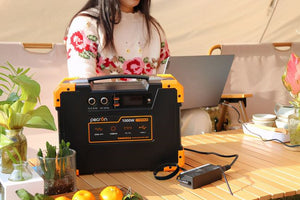
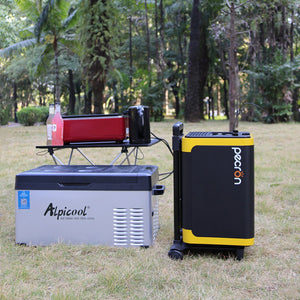
A portable power station can supply stored electricity without running a combustion engine, but it still needs to be charged, kept dry, operated within its rated limits, and used according to the manufacturer’s instructions. Test the unit and every required cable before a trip.
Plan RV Backup Power by Watt-Hours, Not Guesswork
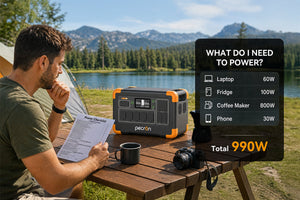
A large battery is only useful if you know what it must support. Start with essential devices and estimate daily energy use:
|
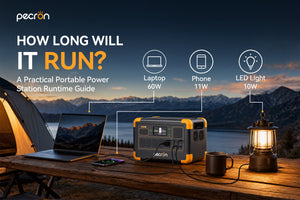
Simple estimate: Device watts × hours used = watt-hours (Wh). For example, a 60W device used for 8 hours requires about 480Wh before conversion losses and reserve capacity. |
Add the daily watt-hours for refrigeration, lighting, phones, radios, internet equipment, laptops, and necessary medical devices. Then allow a practical reserve and remember that real runtime changes with temperature, cycling loads, inverter losses, and the condition of connected equipment.
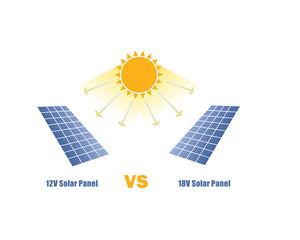
During an outage, prioritize communication, medical needs, refrigeration, and lighting before entertainment or high-draw appliances. If a portable solar panel is part of your backup plan, confirm its voltage and current compatibility in advance. Clouds, shade, season, and panel angle can all reduce real-world solar input.
For longer off-grid stays, a compatible solar generator kit can combine stored energy with solar recharging, but solar availability should be treated as variable rather than guaranteed.
Where the PECRON E3800LFP Fits
For RV owners who need more capacity than a small battery pack can provide, the PECRON E3800LFP portable power station is a high-capacity option designed for RV travel, off-grid use, and emergency backup. Its published specifications include a 3,840Wh LiFePO4 battery, 4,200W pure sine wave AC output, up to 3,000W solar input, more than 3,500 cycles to 80% capacity, and expansion up to 26,880Wh with compatible batteries.
Those numbers do not replace a load calculation. Confirm the starting and running wattage of each appliance, keep the total load within the unit’s limits, and reserve energy for the devices that matter most. Backup power improves flexibility during an outage; shelter, evacuation, and weather awareness still come first.
Portable Power Station vs. Gas Generator for RV Emergencies
Neither option is automatically best for every trip. A battery power station is quiet and convenient for intermittent essential loads, while a fuel generator may support longer high-output operation when fuel is available. Some travelers use both as part of a layered plan.
|
Consideration |
Portable power station |
Gas generator |
|
Operation |
Quiet; no engine exhaust |
Engine noise and exhaust |
|
Energy supply |
Stored battery energy; recharge from compatible sources |
Requires an appropriate fuel supply |
|
Maintenance |
Follow battery storage and charging guidance |
Requires engine and fuel-system maintenance |
|
Solar charging |
Available on compatible models |
Not a direct charging source |
|
Use near living space |
Follow the product manual; keep dry and ventilated |
Never run indoors or in enclosed/partly enclosed spaces |
|
Best fit |
Essential loads, quiet hours, travel, and short outages |
Extended high-output needs where safe outdoor operation is possible |
Never operate a combustion generator inside an RV, tent, garage, or other enclosed or partly enclosed area. Carbon monoxide can build up quickly even when doors or windows are open.
Common RV Severe Weather Mistakes
· Waiting for visible danger instead of acting on official warnings
· Parking in a scenic but low-lying site without checking flood risk
· Assuming an RV is safe shelter from tornadoes or destructive winds
· Relying on one phone, one app, or continuous cell service
· Arriving at a remote site with low water, fuel, or battery reserves
· Buying emergency equipment but never testing it
· Trying to power every appliance instead of protecting essential loads
RV Severe Weather FAQs
Is it safe to stay in an RV during a thunderstorm?
It depends on the hazard. A fully enclosed vehicle may offer lightning protection, but an RV is not a safe shelter from tornadoes, destructive winds, falling trees, or large hail. Use a sturdy building or designated shelter when severe wind is possible, and follow local warnings.
What should be in an RV emergency kit?
Include water, nonperishable food, medications, first-aid supplies, flashlights, a weather radio, charging cables, offline maps, basic tools, weather-appropriate clothing, pet supplies, and backup power. Build the quantities around your travelers, trip length, climate, and distance from services.
How long can a portable power station run RV devices?
Runtime depends on usable battery capacity, the device’s average consumption, inverter losses, temperature, and other connected loads. Estimate watt-hours for each device and keep a reserve rather than relying on a single advertised runtime.
Can a 3,840Wh power station run an RV refrigerator?
Often, but the runtime varies widely because refrigerators cycle on and off and their consumption changes with ambient temperature, set point, size, and door openings. Measure or verify the refrigerator’s real energy use before depending on it during an outage.
Is LiFePO4 suitable for RV backup power?
LiFePO4 batteries are commonly used in portable power stations because they offer long cycle life and good thermal and chemical stability. The complete product design, battery-management system, temperature limits, and correct use still matter.
Final Checklist Before the Forecast Changes
· Check the route and destination forecast
· Identify a sturdy shelter and two exit options
· Enable alerts and carry a second weather-information source
· Move away from flood-prone or tree-exposed sites
· Organize water, food, medications, documents, and pet supplies
· Charge and test communication and backup power equipment
· Leave early when authorities recommend evacuation
Severe weather may disrupt a trip, but early decisions can prevent it from becoming an emergency. Treat the RV as transportation and temporary living space—not a storm shelter—and build a layered plan that combines official alerts, safe shelter, essential supplies, and realistic backup power.