- Sep 02
- Di Pecron LLC

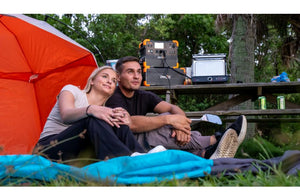
Labor Day weekend has a way of turning a simple packing list into a small electrical system. Phones need charging, the cooler has become a portable fridge, and someone will want coffee before the campsite is fully awake. Add lights, a fan, a laptop, cameras, or a small cooker, and the power demand rises quickly.
So, how much portable power station capacity do you actually need for a three-day trip? The answer depends less on the number of devices you pack and more on how many watts they draw, how long they run, and whether you can recharge along the way.
Labor Day falls on Monday, September 7, in 2026, creating a three-day weekend for camping, RV travel, beach trips, tailgating, and backyard gatherings. Use the steps below to size your setup without hauling more battery than you need—or running out of power on the second night.
Start With the Trip, Not the Battery Size
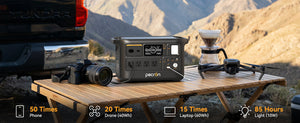
A one-night tent trip and a three-day RV stay call for very different power plans. If you only need to charge phones, run LED lights, and top up a camera, a compact unit may be enough. A portable fridge, CPAP machine, overnight fan, coffee maker, or RV appliance changes the calculation.
Write down what you will realistically use each day. A typical long-weekend list might include:
· Phones charged once or twice a day
· LED lights for a few hours each evening
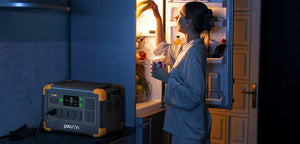
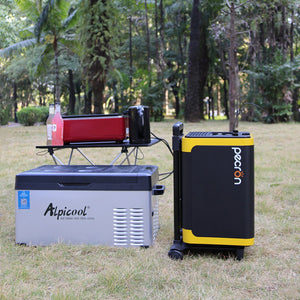
· A portable fridge or powered cooler running throughout the trip
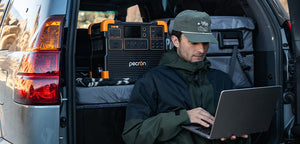
· A laptop or camera batteries charged as needed
· A fan running for several hours overnight
· A coffee maker or small cooker used briefly

This is why choosing an outdoor power station by battery size alone can be misleading. You need enough stored energy for the trip and enough AC output to start and run your appliances.
Watts vs. Watt-Hours: What Each Number Tells You
Two specifications matter most when comparing a portable power station:
· Watts (W) measure how much power a device needs at a given moment.
· Watt-hours (Wh) measure how much energy the battery can store.
A 100W device running for five hours theoretically uses 500Wh:
100W × 5 hours = 500Wh
Real runtime will be shorter because the inverter and other electronics consume some energy. Temperature, compressor cycling, and changing loads also affect the result.
Output is a separate limit. A station may have a 2,000Wh battery, but if its inverter is rated for only 600W, it cannot run a 1,200W coffee maker. Check Wh for runtime and W for appliance compatibility.

How to Estimate Daily Energy Use
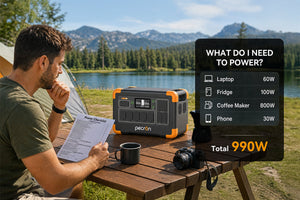
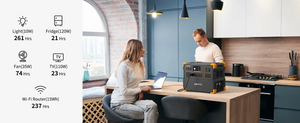
List each device, note its wattage, and estimate how many hours it will run each day. Then multiply watts by hours.
|
Device |
Example Load |
Daily Use |
Approx. Energy |
|
Phone charging |
10W |
2 hr |
20Wh |
|
LED lights |
20W |
4 hr |
80Wh |
|
Laptop |
60W |
3 hr |
180Wh |
|
Fan |
40W |
6 hr |
240Wh |
|
Small cooler |
50W average* |
10 hr |
500Wh |
*Cooler consumption varies because the compressor cycles on and off.
This example totals about 1,020Wh per day. Over three days, the theoretical requirement is roughly 3,060Wh before conversion losses or extra loads. That does not automatically mean you need a 3,000Wh unit: you may recharge with solar, reduce fan runtime, or use the laptop less than expected.
Leave some reserve instead of planning to drain the battery completely. A practical buffer helps cover cloudy weather, higher temperatures, longer-than-expected use, and the small devices that never made it onto the list.
Which Capacity Range Fits Your Labor Day Trip?
The ranges below are useful starting points, not fixed rules. Your actual load and recharge options should decide the final size.
|
Capacity Class |
Typical Loads |
Best Fit |
|
300–500Wh |
Phones, lights, cameras, small electronics |
Minimal or overnight camping |
|
Around 1,000Wh |
Electronics, lights, fan, small cooler |
Car camping and weekend trips |
|
Around 2,000Wh |
Larger cooler, cooking, more electronics |
Comfort-focused multi-day camping |
|
3,000Wh+ |
Multiple appliances and longer runtimes |
RV, tailgate, or high-demand basecamp |

For beach days, portability often matters as much as capacity. Several hundred watt-hours can cover phones, cameras, speakers, and lights. If you add a powered cooler and plan to stay into the evening, a unit around 1,000Wh gives you more flexibility. Keep any power station protected from water, sand, excessive heat, and direct sun.
High-Wattage Appliances Can Change the Answer
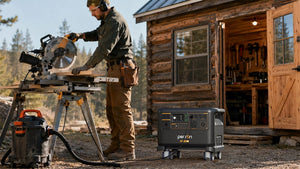
Coffee makers, induction cookers, electric grills, hair dryers, and portable air conditioners can draw hundreds or thousands of watts. They may not run for long, but their instantaneous demand determines whether the inverter can power them at all.
Before leaving, check the wattage label on every high-demand appliance. Add together the devices that may run at the same time, then compare that total with the power station’s continuous AC output. Also check the surge rating for appliances with motors or compressors.
For example, a 1,200W coffee maker plus 200W of other active loads requires more than a 1,000W inverter, even if the battery still has plenty of energy stored.
Solar Charging Can Reduce the Battery You Carry
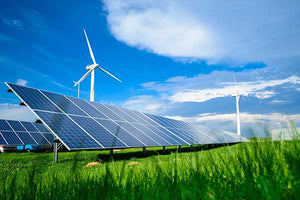
Solar charging turns the battery from a one-time energy supply into a system you can replenish during the trip. That can make a smaller power station workable for a multi-day stay, especially when daytime loads are modest.
Do not expect a 300W panel to produce 300W all day. Output changes with sun angle, clouds, shade, panel temperature, orientation, and cable losses. Treat solar as a recharge plan with variable results—not as guaranteed daily energy.
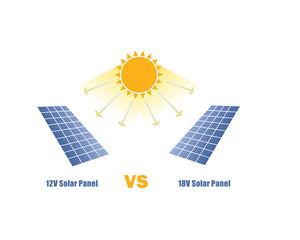
Before buying a panel, confirm the power station’s solar input voltage, current, and connector requirements. A compatible portable solar panel is more useful than a larger panel the station cannot accept efficiently.
When a 3,000Wh-Class Power Station Makes Sense
A larger system becomes easier to justify when your long weekend includes an RV refrigerator, cooking appliances, overnight fans, CPAP equipment, several 120V devices, or limited opportunities to recharge. More capacity means less time deciding which device must be unplugged next.
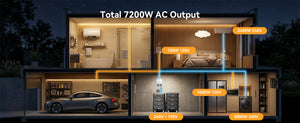
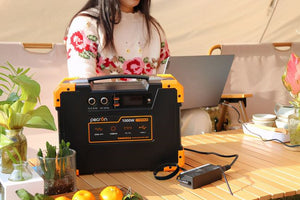
The PECRON F3000LFP combines a 3,072Wh LiFePO4 battery with 3,600W rated AC output and a 4,500W surge rating for up to five seconds. It supports up to 1,600W solar input and 1,800W AC charging. With compatible expansion batteries, capacity can grow to 10,752Wh for longer stays or heavier use.
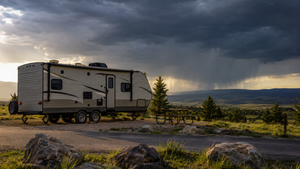
That makes the F3000LFP better suited to an RV, tailgate, car campsite, or fixed basecamp than a hike-in site. The extra capacity is valuable when you are staying put; it is unnecessary weight when mobility is the priority.

How to Pack and Use a Power Station Outdoors
A power station is portable, but it should not be treated like weatherproof outdoor furniture. Before leaving home:
· Fully charge the unit and test every cable.
· Pack the correct solar, vehicle, and appliance adapters.
· Check the forecast and keep the unit away from rain and standing water.
· Leave ventilation openings unobstructed.
· Route cables away from foot traffic and vehicle movement.
· Follow the manufacturer’s operating and charging temperature limits.
· Review the rules for your campground before arrival.
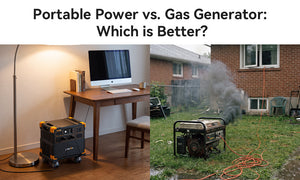
Campground generator rules vary by location and may limit when engine-driven generators can operate. Battery power stations are useful during quiet hours because they provide electricity without fuel, exhaust, or engine noise, but site-specific safety rules still apply.
Labor Day Power Planning Checklist
1. List your devices — Include phones, lights, coolers, medical equipment, and cooking appliances.
2. Check the wattage — Identify the highest-demand loads and anything with a compressor or motor.
3. Estimate daily hours — Multiply each device’s wattage by expected use.
4. Add the watt-hours — This gives you a rough daily energy requirement.
5. Multiply by trip length — A three-day weekend needs a different plan from an overnight stay.
6. Add a reserve — Do not size the battery exactly to the theoretical minimum.
7. Check simultaneous loads — Make sure continuous AC output covers everything used at once.
8. Plan how you will recharge — Choose AC, solar, vehicle charging, or a combination.
9. Check site rules — Confirm local requirements before you set up.
10. Match size to mobility — Extra capacity helps at basecamp but adds weight to every move.
Final Takeaway
The right portable power station balances battery capacity, AC output, portability, and recharge options. A 500–1,000Wh unit may be enough for lights, phones, a fan, and light cooler use. Add cooking appliances, RV equipment, or several days off-grid, and a 2,000Wh or larger solar generator system becomes more practical.
Size the system around the trip you are actually taking. A few minutes spent checking appliance labels and estimating daily watt-hours can prevent both an overloaded inverter and an unnecessarily heavy campsite setup.
FAQ
How many Wh do I need for Labor Day camping?
Several hundred Wh may cover basic electronics and lighting. Around 1,000Wh offers more flexibility for a weekend, while RVs, cooking equipment, and other high-power loads may call for 2,000Wh or more.
Is 1,000Wh enough for a weekend camping trip?
It can be, especially for powering phones, lights, laptops, fans, and a small cooler. A model in this capacity range, such as the PECRON F1000LFP with 960Wh of battery capacity, can be a practical choice for weekend camping. Actual runtime will depend on device use, conversion losses, temperature, and whether you can recharge during the trip.
Which matters more: watts or watt-hours?
Both. Watts determine whether the station can run an appliance; watt-hours indicate how much stored energy is available and help estimate runtime.
How do I calculate portable power station runtime?
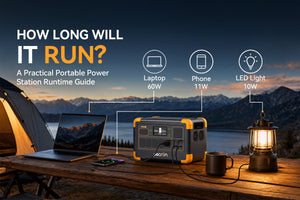
For a rough estimate, divide usable battery energy in Wh by the appliance load in W. A 1,000Wh battery powering a steady 100W load has a theoretical runtime of 10 hours, but real runtime will be shorter because of system losses.
Is a 3,072Wh power station too large for camping?
Not for every trip. It may be excessive for minimalist or hike-in camping, but it can make sense for RV travel, basecamps, multiple appliances, and longer off-grid stays.