- Oct 26
- Von Pecron LLC

A space heater can run from a properly rated power station, but high heat settings drain the battery quickly.
Yes, a properly sized portable power station can run many electric blankets and some portable space heaters. The harder question is how long it will run them. An electric blanket may draw only a fraction of the power used by a 1,500W heater, so two devices that both provide warmth can produce very different battery runtimes.
During an outage, the most efficient plan is usually to warm people first and the room second. Use this guide alongside the winter power outage checklist to decide when electric heat makes sense, how much battery capacity it requires, and what should remain available for refrigeration, communication, or medical equipment.
The Short Answer
A power station must pass two separate tests before it is a practical heating source:
· Output test: Its continuous AC output must exceed the heater or blanket wattage, with room for any other connected devices.
· Energy test: Its battery capacity must be large enough to provide useful runtime after inverter losses and normal system overhead.
A unit may pass the output test and still deliver disappointing runtime. For example, a 1,024Wh battery can theoretically store enough energy for a large load, but a 1,500W heater can use most of that energy in well under an hour. A 100W heated blanket is a much lighter load and can provide warmth for much longer.
Check the Heating Device Before Choosing a Power Station
Look at the rating label on the heater, blanket controller, or power adapter. Use the highest wattage you actually plan to select, not the lowest setting printed in an advertisement. If the label lists volts and amps instead of watts, estimate the load with:
Watts = Volts x Amps
Also check whether the heater has multiple heat settings, a thermostat, an oscillating fan, or an electronic control panel. The real draw may change as the heater cycles, but in a cold room it may stay near full power for long periods. Plan for the rated load until you have measured the device with a plug-in watt meter.
Space Heater Power Requirements
Portable electric space heaters are demanding battery loads because they convert electricity directly into heat. A heater with 750W and 1,500W settings may be easy for a large inverter to start, but the high setting consumes twice as much energy every hour. The fan, thermostat, and controls add little compared with the heating element, so continuous wattage and battery capacity matter more than a short startup surge in most cases.
If you are comparing a heater with cooking equipment, pumps, tools, or other demanding appliances, review the guide to running high-wattage appliances off-grid.
Electric Blanket Power Requirements
An electric blanket or heated throw usually requires far less power than a room heater, but the exact rating still matters. Check both the controller and the blanket label, especially for dual-control models. For the runtime examples below, this article uses a 100W blanket as a simple planning load; your blanket may be higher or lower.
Because a blanket places heat close to the user, it can be a more practical battery-powered comfort option when the goal is to stay warm in one place. It does not heat the room, and it should never replace a safe-home-temperature plan in severe cold.


Personal heating can preserve far more battery capacity than trying to warm an entire room.
Space Heater vs Electric Blanket
|
Comparison |
Portable space heater |
Electric blanket or heated throw |
|
Planning load used here |
750W low / 1,500W high |
100W example |
|
What it warms |
Part of a room |
The person using it |
|
Battery demand |
High |
Low by comparison |
|
Best outage use |
Short, supervised heating blocks |
Longer personal-comfort periods |
|
Main limitation |
Rapid battery drain |
Does not protect the entire room or plumbing |
The blanket is usually the better choice when battery conservation matters. A space heater becomes more reasonable when you have several kilowatt-hours of battery capacity, a dependable recharge plan, and a small occupied room that can retain heat.
How Long Will a Portable Power Station Run Electric Heat
Use this planning formula:
Estimated runtime = battery capacity in Wh x 0.85 / device watts
The 0.85 factor allows for inverter losses and system overhead. It is not a guarantee. Battery temperature, heater cycling, power-station efficiency, battery condition, and other connected loads can shorten or extend the result.
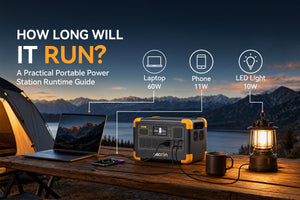
For a fuller explanation of usable capacity, AC efficiency, and appliance duty cycles, see the portable power station runtime chart.
|
Rated battery capacity |
100W electric blanket |
750W heater setting |
1,500W heater setting |
|
1,024Wh |
8.7 hours |
1.2 hours |
0.6 hours |
|
2,048Wh |
17.4 hours |
2.3 hours |
1.2 hours |
|
3,840Wh |
32.6 hours |
4.4 hours |
2.2 hours |
|
5,120Wh |
43.5 hours |
5.8 hours |
2.9 hours |
Planning estimates assume 85% usable energy and continuous operation at the listed load. A thermostatically controlled heater may run longer if it cycles off, while a very cold room may keep it near full output. Always leave reserve energy for essential devices.
Why a 1500W Power Station Is Not Automatically a Good Match
A station rated for exactly 1,500W may run a 1,500W resistive heater under ideal conditions, but it leaves almost no output headroom. The heater may draw slightly more than its nominal rating, and even a phone charger, router, or internal operating load adds to the total. The safer planning approach is to choose an inverter comfortably above the continuous heater load and verify the individual AC outlet rating in the product manual.
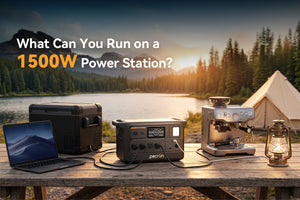
The same distinction applies to other appliances covered in what a 1500W portable power station can run: inverter watts determine whether the load can operate, while battery watt-hours determine how long it operates.
How to Make Limited Battery Heat Last Longer
1. Choose personal heat first. Use an electric blanket or heated throw when one person needs warmth and room heating is not essential.
2. Use the lowest effective heater setting. Moving from 1,500W to 750W can roughly double continuous runtime.
3. Heat one occupied room. Close interior doors, block drafts safely, and use curtains without placing fabric near the heater.
4. Run the heater in supervised blocks. Preheat the room, turn the heater off, and reassess before using another block of energy.
5. Separate comfort power from essential power. Reserve capacity for phones, lights, refrigeration, and medical equipment before allocating energy to heat.
6. Watch the power-station display. After 15 to 30 minutes, compare actual watts and remaining runtime with the original estimate.
7. Recharge during the best available window. Solar input can help after the storm, but winter clouds, short days, shading, and snow make production variable.
If heating is part of a multi-day plan, a solar generator kit can add a recharge path, but panel output should not be treated as guaranteed daily energy.
Safe Use of a Space Heater With a Power Station
The U.S. Consumer Product Safety Commission advises plugging electric space heaters directly into a wall outlet rather than an extension cord or power strip, keeping heaters at least three feet from combustible materials, and turning them off when sleeping. When a manufacturer permits operation from a portable power station, use the same direct-connection principle: connect the heater directly to a properly rated AC outlet on the station, without an extension cord or power strip.
· Keep the heater on a stable, level, noncombustible surface where it cannot be knocked over.
· Maintain at least three feet of clearance from bedding, curtains, clothing, furniture, paper, and other items that can burn.
· Do not run the heater while sleeping or leave it operating unattended.
· Do not place the power station beside the heater or block its cooling vents.
· Keep both devices dry and away from sinks, wet footwear, melting snow, and condensation.
· Stop using the setup if a plug, socket, cable, or housing becomes unusually hot, smells damaged, or shows discoloration.
· Use the heater only if both manuals allow the setup and the station outlet can support the continuous current.

Connect the heater directly, keep clear space around it, and protect the power station from heat and blocked ventilation.
Safe Use of an Electric Blanket With a Power Station
Follow the blanket manufacturer instructions and check for recalls before seasonal use. CPSC home-safety guidance warns against using an electric blanket while it is folded, tightly tucked, covered by objects, or positioned where the power cord can be pinched or crushed.
· Inspect the blanket, controller, connector, and cord before use. Stop if wires feel damaged or heat is uneven.
· Lay the blanket as directed and do not sharply fold, bunch, or compress the heating elements.
· Keep the controller uncovered and the cord where it cannot be pinched by furniture or walked on.
· Place the power station on a dry, hard surface with its vents clear, not on the bed, sofa, or blanket.
· Follow the product instructions for overnight use and automatic shutoff. Do not assume every heated blanket is intended to remain on while sleeping.
Choosing a PECRON Power Station for Electric Heat
Choose output power first, then choose capacity. The power station must support the heating device without operating at its limit, and the battery must provide enough watt-hours for the expected use. Heating should not consume the reserve set aside for critical loads.
|
Model |
Rated output / capacity |
Best fit in this guide |
Planning note |
|
PECRON E1000LFP |
1,800W / 1,024Wh |
Electric blanket, heated throw, or short heater use |
A 1,500W heater leaves little spare output and has limited runtime |
|
PECRON E2400LFP |
2,400W / 2,048Wh |
Electric blanket plus selected essentials; moderate heater use |
Useful middle capacity, but high heat still drains it quickly |
|
PECRON E3800LFP |
4,200W / 3,840Wh |
Primary recommendation for a space heater and planned winter backup loads |
More output headroom and about 2.2 hours at a continuous 1,500W planning load |
|
PECRON F5000LFP |
7,200W / 5,120Wh |
Longer heating runtime and broader home-backup planning |
Higher capacity, but continuous resistance heat remains energy intensive |
For personal heating and lighter backup needs, the PECRON E1000LFP or PECRON E2400LFP can be practical when the load and desired runtime are modest. For regular use with a full-size space heater, the PECRON E3800LFP is the strongest all-around fit in this article because it provides 4,200W of output and 3,840Wh of rated capacity.
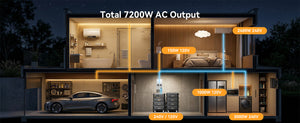
The PECRON F5000LFP increases capacity to 5,120Wh and supports larger home-backup plans. Even then, using a 1,500W heater continuously consumes energy quickly, so it is better treated as one planned load rather than an unlimited heating source.
If you are still deciding between capacity classes, use the portable power station size guide to total the rest of the household load before selecting a model.

Match the battery to the heating method: personal heat uses far less energy than heating a room.
When a Gas Generator May Be More Practical
For an extended outage in severe cold, continuous electric resistance heat can exceed what a battery-only plan can reasonably supply. A properly installed primary heating system, relocation plan, or safely operated outdoor generator may be more practical depending on the home and local conditions. Never operate a fuel-burning generator indoors or near doors, windows, or vents.
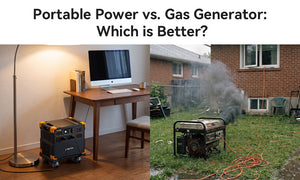
The comparison of portable power stations and gas generators explains the differences in indoor use, fuel, noise, maintenance, and long-outage runtime.
Frequently Asked Questions
Can a 500W portable power station run a space heater
Not a standard 750W or 1,500W space heater. A heater whose actual input stays below the station’s continuous output may operate, but both ratings and the individual outlet limit must be checked. Small batteries also provide short runtime with any resistance heater.
Can a 1500W power station run a 1500W heater
It may operate under ideal conditions, but matching the heater exactly to the inverter rating leaves no useful headroom. A station with a comfortably higher continuous output is a better choice, and no other loads should be added without recalculating the total.
How long will a 2000Wh power station run a space heater
Using an 85% planning factor, a 2,000Wh battery provides about 1,700Wh of usable AC energy. That is roughly 1.1 hours at a continuous 1,500W load or 2.3 hours at 750W. Thermostat cycling and real system efficiency will change the result.
How long will a power station run an electric blanket
Divide usable battery watt-hours by the blanket’s measured watts. At a 100W planning load, a 1,024Wh battery is about 8.7 hours and a 2,048Wh battery is about 17.4 hours after applying the 85% planning factor. Actual controller cycling may change runtime.
Can I run a heater and refrigerator at the same time
Only if the combined continuous load and any refrigerator startup surge remain within the inverter and outlet limits. It may still be a poor energy choice because the heater can consume most of the battery reserve. During an outage, schedule high-wattage heating separately when possible.
Can I recharge the power station with solar while running a heater
Some systems support charging while supplying AC power, but the manual must confirm the operating mode and input limits. A large heater may consume power much faster than portable panels replace it, especially during short or cloudy winter days.
Can a Portable Power Station Run a Space Heater or Electric Blanket
Yes, but the two heating options are not equal from a battery perspective. A properly rated station can operate a space heater, yet continuous room heating can empty even a large battery in a few hours. An electric blanket directs heat where it is needed and can run much longer from the same capacity.
For most winter outages, reserve electricity for health, communication, refrigeration, and lighting first. Use an electric blanket for efficient personal warmth, and treat a space heater as a short, supervised load backed by a realistic runtime calculation. If a full-size heater is part of the plan, the PECRON E3800LFP is the primary recommendation in this guide, while the F5000LFP provides a higher-capacity option for broader backup needs.