- Sep 20
- Von Pecron LLC

A 1500W portable power station can handle far more than phones and laptops. It can power a refrigerator, CPAP machine, television, coffee maker, many power tools, and some cooking appliances, provided their combined running load stays within 1,500 watts and their startup demand does not exceed the inverter’s surge rating.
The 1,500W rating answers whether an appliance can run. It does not tell you how long the appliance will run. Runtime depends on battery capacity, measured in watt-hours (Wh), along with conversion losses and the device’s actual power use.
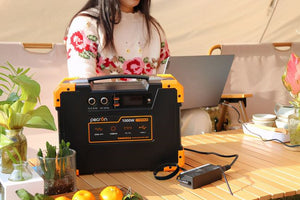
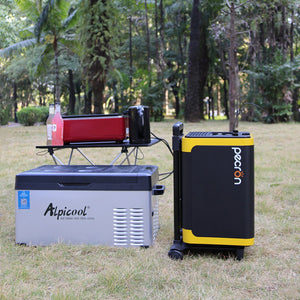
This guide uses the PECRON F1000LFP as a practical example. It combines 1,500W continuous AC output, 3,000W surge power, and a 960Wh LiFePO4 battery.
Quick Answer
A 1500W power station can typically run the following devices:
· Phones, tablets, laptops, cameras, drones, and Wi-Fi equipment
· LED lights, fans, televisions, and projectors
· CPAP machines and other low-power medical equipment
· Portable refrigerators and many full-size refrigerators
· Coffee makers, compact microwaves, and kettles rated at or below 1,500W
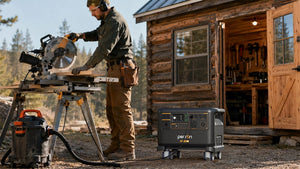
· Drills, sanders, jigsaws, and other tools whose startup demand fits the surge limit
The number of connected devices is not the main limit. Their combined wattage is. Several small devices may use less power than one coffee maker, and an appliance with a motor may require a brief burst of power when it starts.
Running Watts and Starting Watts
Continuous output
Running watts are the power an appliance draws during normal operation. If a coffee maker uses 1,100W, it fits within a 1,500W continuous limit. If it uses 1,600W, it does not, even if no other device is connected.
Startup demand
Refrigerators, air conditioners, pumps, compressors, and some power tools can draw much more power for a moment when their motors start. Check the appliance label or manual for starting watts, locked-rotor amps, or surge demand. Use the manufacturer’s figure when available instead of relying on a generic multiplier.
Heating appliances such as kettles and space heaters usually do not have the same motor-start surge. Their challenge is sustained high consumption: a heater near 1,500W can use most of the inverter’s output and drain a 960Wh battery in well under an hour.
If you are still choosing a capacity, use the portable power station size guide to total running watts, startup watts, and daily energy use before selecting a model.
Combined Loads
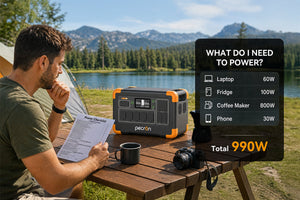
When several devices run at the same time, add their running watts. For example:
|
Device |
Approximate load |
|
Laptop |
60W |
|
LED lights |
20W |
|
Phone charging |
20W |
|
Combined load |
100W |
A 100W combined load leaves ample output headroom. Battery runtime is a separate calculation, so a low combined load can still exhaust the battery if it runs for many hours.
Appliance Compatibility Guide
The ranges below are planning estimates. Actual input varies by model, power setting, temperature, and operating cycle. Always use the rating label on your appliance for the final check.

|
Appliance |
Typical power |
1500W fit |
What to check |
|
Phone or tablet |
5–20W |
Yes |
Very low load |
|
LED lights |
5–20W |
Yes |
Multiple lights are usually easy to support |
|
Fan |
20–100W |
Yes |
Check larger floor fans |
|
Laptop |
30–100W |
Yes |
Charger rating is a useful upper estimate |
|
CPAP machine |
30–100W |
Usually |
Heated humidifiers increase consumption |
|
Portable refrigerator |
40–80W running |
Usually |
Compressor cycles and has a startup surge |
|
Full-size refrigerator |
100–250W running |
Usually |
Verify compressor startup demand |
|
TV or projector |
50–200W |
Yes |
Brightness and screen size affect use |
|
Coffee maker |
600–1,500W |
Check label |
Short, high-power use |
|
Microwave |
900–1,500W input |
Check label |
Cooking output is lower than electrical input |
|
Electric kettle |
1,000–1,500W |
Check label |
Leaves little output headroom |
|
Induction cooktop |
800–1,800W |
Depends |
Use a setting below the station limit |
|
Hair dryer |
800–1,800W |
Depends |
Lower heat settings may draw less |
|
Power tools |
300–1,500W+ |
Depends |
Motor startup demand matters |
|
Window air conditioner |
500–1,500W+ |
Depends |
Check both running and startup watts |
|
Space heater |
750–1,500W |
Limited |
Runs briefly because energy use is high |
|
Dryer, water heater, central AC |
2,000W+ |
No |
Normally requires a larger system |
Common Use Cases
Camping and overlanding
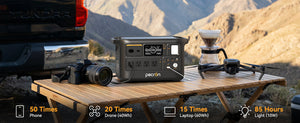
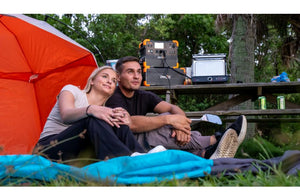
Most campsite electronics draw modest power. A 1500W unit can keep a portable fridge cold, run lights and fans, charge cameras and laptops, and power a coffee maker for a few minutes. The high-wattage appliance should be used on its own if the other connected loads would push the total above 1,500W.
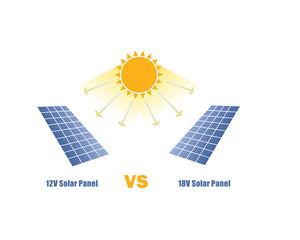
For trips longer than a day, battery capacity and charging conditions matter more than inverter size. Shade, panel angle, weather, and daylight hours all affect solar input, so plan from realistic daily energy use rather than the panel’s nameplate rating alone.
Short power outages
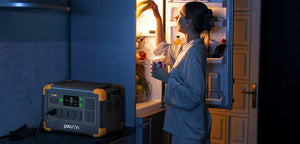
During an outage, a 1500W station is best used for selected essentials rather than whole-home backup. A refrigerator, router, a few lights, phone chargers, and a CPAP machine can fit within the output limit, but they may not all need to run continuously. Scheduling high-draw appliances preserves energy for critical devices.
For refrigerator-specific sizing, see the guide to portable power stations for refrigerators, which explains compressor cycling and startup demand in more detail.
RV and van travel
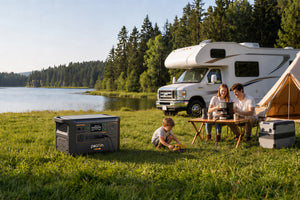
A 1500W power station can support laptops, lights, fans, cameras, a small refrigerator, and occasional cooking loads in a van or RV. It is less suitable for running several heating or cooking appliances at once. Check whether each device uses AC or DC, because direct DC operation can avoid some inverter loss when compatible equipment is available.
Pairing the station with a compatible panel creates a solar generator setup that can replace part of the energy used during the day. Solar input extends off-grid time, but it does not increase the inverter’s 1,500W output limit.

Estimated Runtime
For an AC appliance, a useful planning formula is:
Estimated runtime = battery capacity × efficiency factor ÷ appliance watts
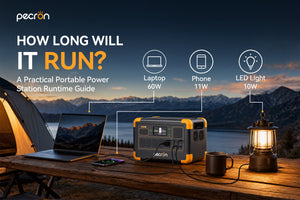
Using the F1000LFP as an example, 960Wh × 0.85 gives about 816Wh of estimated usable energy for AC loads. The 85% factor is a planning assumption, not a guaranteed efficiency figure. Results vary with the load, inverter overhead, temperature, battery condition, and automatic shutdown reserve.
|
Device |
Example load |
Estimated runtime |
|
CPAP without heated humidifier |
40W |
About 20.4 hours |
|
Laptop |
60W |
About 13.6 hours |
|
Projector |
65W |
About 12.5 hours |
|
Portable refrigerator while compressor runs |
60W |
About 13.6 hours continuous |
|
Full-size refrigerator while compressor runs |
150W |
About 5.4 hours continuous |
|
Coffee maker |
1,000W |
About 49 minutes of total heating time |
|
Appliance at full 1,500W load |
1,500W |
About 33 minutes |
Refrigerators do not normally run their compressors nonstop. Once the cabinet is cold, the compressor cycles on and off, so elapsed backup time may be much longer than the continuous-load estimate. Room temperature, door openings, food load, and thermostat settings can change the result substantially.
For a fuller explanation of efficiency and duty cycles, read how long a portable power station will run.

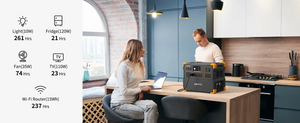
Runtime values are planning estimates. Refrigerator runtime shown in the graphic assumes a continuous 60W load.
What a 1500W Power Station Cannot Run
A 1500W unit has clear limits. It is generally not suitable for:
· Appliances with continuous input above 1,500W
· Equipment whose startup demand exceeds the power station’s surge rating
· Two or more high-draw appliances whose combined load exceeds 1,500W
· Long-duration electric heating when the battery is around 1kWh
· Typical central air conditioners, electric dryers, electric water heaters, and large ovens
Some appliances sit close to the limit and need model-by-model checking. The guide to running high-wattage appliances off grid explains why nameplate input, startup demand, and operating mode all matter.
How to Check Your Setup
1. Check running watts. Use the appliance’s input rating, not a marketing category or microwave cooking-output number. Add the running watts of devices that will operate together.
2. Check starting watts. For compressors, pumps, air conditioners, and motor-driven tools, confirm that the startup demand fits within the station’s surge rating.
3. Estimate energy use. Multiply watts by hours for each device, add the results, and allow for conversion losses. A 60W laptop used for five hours needs roughly 300Wh before losses.
Leave practical headroom when possible. Running continuously at the exact output ceiling gives you no margin for another device, a compressor cycle, or variation in the appliance’s actual draw.
PECRON F1000LFP as a 1500W Example
The F1000LFP pairs 1,500W continuous AC output with 3,000W surge power and 960Wh of LiFePO4 storage. PECRON rates it for 3,500 or more cycles to at least 80% capacity. It supports up to 1,000W AC input and 600W solar input, with 0–80% AC charging listed at about 50 minutes under the specified conditions.
This combination suits moderate everyday loads and short periods of high power. The 960Wh battery is enough for many hours of low-power electronics, but a kettle, heater, or microwave consumes the stored energy quickly. That distinction is why output and capacity should always be considered together.
Frequently Asked Questions
Can a 1500W power station run a refrigerator
Yes, many portable and household refrigerators can run on a 1500W power station. Check the refrigerator’s running input and compressor startup demand. A 960Wh battery may keep a refrigerator operating longer than a simple continuous-load calculation suggests because the compressor cycles off after the interior reaches its set temperature.
Can a 1500W power station run a microwave
Often, but check the electrical input on the label. A microwave advertised as 900W may draw considerably more than 900W from the outlet. Models with input at or below 1,500W may work, while larger units can exceed the inverter limit.
Can a 1500W power station run a space heater
A heater rated at 1,500W may run, but it uses the station’s full continuous output and can drain a 960Wh battery in roughly half an hour after typical conversion losses. A lower setting reduces the load, but electric space heating remains energy intensive.
Can a 1500W power station run an air conditioner
Some small window or portable air conditioners may fit within the continuous output rating, but compressor startup demand can still cause an overload. Larger household systems generally require more than a 1500W power station can supply. Check both running and starting specifications.
How many devices can run at the same time
There is no fixed number. A laptop, router, lights, and phone chargers may draw only a small fraction of 1,500W. A microwave and kettle could exceed the limit even though each works on its own. Add the loads that will operate simultaneously.
How long will a 1500W power station run
The answer depends on battery capacity, not the 1,500W inverter rating alone. With a 960Wh battery and an 85% AC planning factor, a 60W device has a theoretical runtime of about 13.6 hours, while a 1,000W load has about 49 minutes. Real results vary.
The Bottom Line
A 1500W power station is a practical middle-size option for camping, RV travel, outdoor work, and short outages. It can run many refrigerators, CPAP machines, electronics, tools, and small kitchen appliances. The safest way to plan is to check four figures: continuous output, surge output, battery capacity, and the appliance’s actual input.
For the F1000LFP, those key numbers are 1,500W continuous output, and 960Wh of battery capacity. If your simultaneous loads stay within the output limit and your expected energy use fits the battery, the station is a good match for the job.